
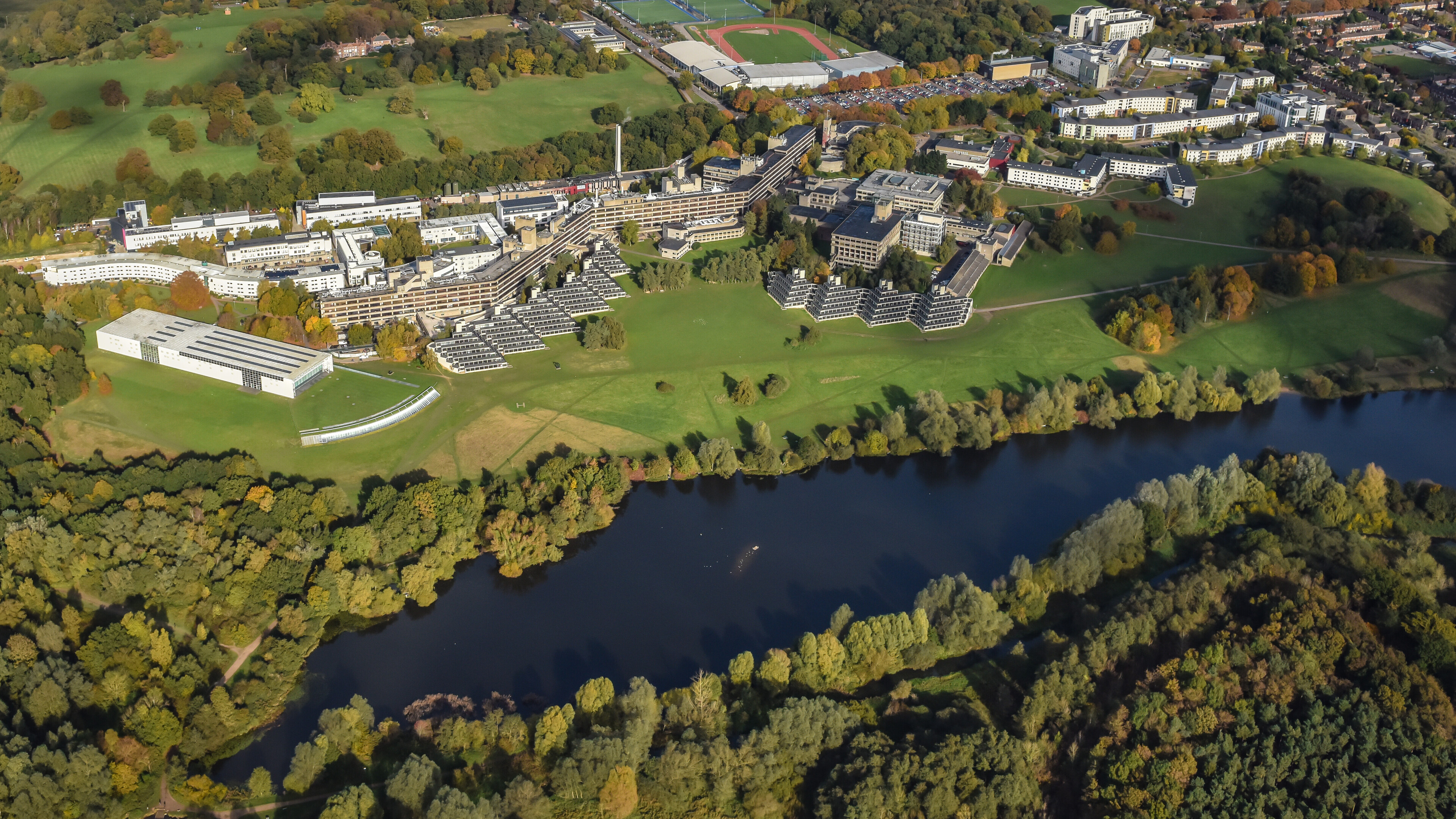

University of East Anglia: a SailEdu partner university
University of East Anglia is a public university in Norwich, United Kingdom, ranked 381 in the QS World University Rankings. SailEdu has a signed partnership with University of East Anglia and is an official application partner, so you can apply online for free to 117 of its programmes (117 Master's) with no agent fees and with help in English and Chinese. Intakes for these programmes are in January, February, September; check each programme page for its own months.
Programs
Log in to see exact tuition fees for each programme.
Master's (117)
Law
Degree classification: UK Bachelors degree - 2.2 or equivalent. Degree subject and course-specific conditions: Law English requirement: IELTS 6.0 overall (6 overall with a minimum of 5.5 in each component) Published 2026/27 international tuition fee: GBP 23850 per academic year.
Law
Degree classification: UK Bachelors degree - 2.2 or equivalent. Degree subject and course-specific conditions: Law or Cognate English requirement: IELTS 6.0 overall (6.0 overall with a minimum of 5.5 in each component) Published 2026/27 international tuition fee: GBP 23850 per academic year.
Law
Degree classification: UK Bachelors degree - 2.2 or equivalent. Degree subject and course-specific conditions: Law or Cognate English requirement: IELTS 6.0 overall (minimum 6.0 overall with a minimum of 5.5 in each component) Published 2026/27 international tuition fee: GBP 23850 per academic year.
Law
Degree classification: UK Bachelors degree - 2.2 or equivalent. Degree subject and course-specific conditions: Law or Cognate English requirement: IELTS 6.0 overall (with a minimum of 5.5 in each component) Published 2026/27 international tuition fee: GBP 23850 per academic year.
Law
Degree classification: UK Bachelors degree - 2.2 or equivalent. Degree subject and course-specific conditions: Law English requirement: IELTS 6.0 overall with minimum 5.5 in each component. Published 2026/27 international tuition fee: GBP 23850 per academic year.
Social Sciences
Degree classification: UK Bachelors degree - 2.2 or equivalent. Degree subject and course-specific conditions: Social Sciences Additional Entry Requirements Applicants should normally have a good undergraduate degree from a recognised higher education institution. The University will also take into account the employment experience of applicants where relevant. English requirement: IELTS 6.0 overall (minimum 5.5 in each component). Published 2026/27 international tuition fee: GBP 23850 per academic year.
Social Sciences
Degree classification: UK Bachelors degree - 2.2 or equivalent. Degree subject and course-specific conditions: Any subject considered - You need to be proficient in a second language. English requirement: IELTS 6.0 overall (minimum 5.5 in each component) Published 2026/27 international tuition fee: GBP 23850 per academic year.
Social Sciences
Degree classification: UK Bachelors (Hons) degree - 2.2 or equivalent. Degree subject and course-specific conditions: All subject areas considered Additional Entry Requirements Applicants will need to provide the following as part of their application: Journalistic Writing Sample of maximum 500 words (If longer than 500 words, only the first 500 words will be assessed): The piece must be entirely your own work. It must not have been edited by anyone else or by any AI tools such as Grammarly, ChatGPT or Copilot. Please do not submit work originally written in another language and machine-translated. If you are translating your own work into English, you must do so yourself. We are looking for evidence of your ability to: (a) Identify what makes a strong news story (b) Write in a news or feature style (c) Use accurate, fluent English 'Selfie Video' of maximum 3 minutes in length in one of the following format:.vi,.mov,.mpeg,.mpg,.swf,.mp4. Maximum file size is 1GB: As broadcast journalists must communicate clearly across both audio and video formats, we must be able to both see your face and hear your voice clearly in the video. You must speak in English. You may add in captions or subtitles, but this is not essential. If you include them, please ensure they are free of spelling and grammatical errors. You will need to address the following points – in any order: • Why are you applying for this course, and how will it help you achieve your career goals? • Where do you get your news from, and which journalists do you most admire – and why? • What skills and qualities do you have that would make you a good journalist? • What relevant work experience have you undertaken to help you explore or progress towards a career in journalism? English requirement: IELTS 7.0 overall (minimum 7.0 in all components). In line with the Broadcast and Journalism Training Council accreditation requirements, students with an English proficiency level below IELTS 7.5 in each component, will be enrolled on English Language Modules. Published 2026/27 international tuition fee: GBP 23850 per academic year.
Social Sciences
Degree classification: UK Bachelors degree - 2.2 or equivalent. Degree subject and course-specific conditions: Social Science Additional Entry Requirements Applicants should normally have a good undergraduate degree from a recognised higher education institution. The University will also take into account the employment experience of applicants where relevant. English requirement: IELTS 6.0 overall (minimum 5.5 in each component). Published 2026/27 international tuition fee: GBP 23850 per academic year.
Social Sciences
Degree classification: UK Bachelors degree - 2.2 or equivalent. Degree subject and course-specific conditions: Any subject English requirement: IELTS 6.5 overall (minimum 6.0 in all components) Published 2026/27 international tuition fee: GBP 25300 per academic year.
- MA Creative Writing
- MA Creative Writing Non-Fiction
- MA Creative Writing Poetry
- MA Creative Writing Prose Fiction
- MA Creative Writing Scriptwriting
- MA Cultural Heritage and Museum Studies
- MA Digital Media and Global Communication
- MA Early Modern History
- MA Education and Development
- MA Film and Television Production
- MA Film Studies and Curation
- MA Gender Studies
- MA Global Development
- MA Global Social Development
- MA International Relations
- MA International Relations Double Degree with Ritsumeikan University, Japan
- MA International Security
- MA Literary Translation
- MA Mathematics Education
- MA Media, Communication and Global Development
- MA Media, Culture and Society
- MA Medieval History
- MA Modern and Contemporary Writing
- MA Modern History
- MA Public Policy and Public Management
- MA Teaching English to Speakers of Other Languages (TESOL)
- MA The Arts of Africa, Oceania and the Americas
- MBA Master of Business Administration
- MRes Clinical Science
- MRes Philosophy
- MSc Accounting
- MSc Accounting and Analytics
- MSc Accounting and Finance
- MSc Accounting and Sustainability
- MSc Adult Nursing - Preregistration (February Start)
- MSc Advanced Computing Science
- MSc Advanced Organic Chemistry
- MSc Advancing Healthcare Practice
- MSc Animal Behaviour
- MSc Applied AI and Business Analytics
- MSc Applied Ecology and Conservation
- MSc Applied Physics
- MSc Artificial Intelligence
- MSc Banking and Finance
- MSc Behavioural Economics and Data Science
- MSc Biology of Ageing
- MSc Biotechnology and Engineering Biology
- MSc Business Management
- MSc Climate Change and Global Development
- MSc Climate Change and Net Zero Solutions
- MSc Cognitive Neuroscience
- MSc Computing
- MSc Computing Science
- MSc Cyber Security
- MSc Cyber Security with Artificial Intelligence
- MSc Data Science
- MSc Data Science for Biology
- MSc Data Science for Chemistry
- MSc Data Science for Drug Discovery
- MSc Data Science for Environmental Science
- MSc Data Science for Public Policy and Politics
- MSc Data Science for Renewable Energy
- MSc Developmental Psychology: Clinical Applications to Children
- MSc Developmental Science
- MSc Dietetics (pre-registration) (February Start)
- MSc Digital Business and AI
- MSc Digital Marketing
- MSc Drug Discovery
- MSc Economics
- MSc Economics and Data Science
- MSc Economics and International Relations
- MSc Education Leadership and Management
- MSc Energy Engineering
- MSc Energy Engineering with Environmental Management
- MSc Environment and Global Development
- MSc Environmental Assessment and Management
- MSc Environmental Sciences
- MSc Evolution and Genomics
- MSc Finance
- MSc Finance and Economics
- MSc Finance and Management
- MSc Fintech, AI and Data Science
- MSc Global Development Management
- MSc Global Plant Health
- MSc Global Policy and Evaluation
- MSc Global Public Health
- MSc Human Resource Management
- MSc International Business and Innovation
- MSc International Business Economics
- MSc International Business Finance and Economics
- MSc Managing Sustainability
- MSc Marketing and Management
- MSc Mental Health Nursing - Preregistration (February Start)
- MSc Microbiology
- MSc Molecular Medicine
- MSc Occupational Therapy (February Start)
- MSc Organisational Psychology
- MSc Pharmaceutical Sciences
- MSc Physiotherapy (February Start)
- MSc Plant Genetics and Crop Improvement
- MSc Policy, Behaviour and Data for Global Development
- MSc Professional Practice in Sport
- MSc Purchasing and Supply Chain Management
- MSc Social and Applied Psychology
- MSc Stem Cell Biology
- MSc Sustainability and Society
- MSc Sustainable Business Management
University of East Anglia: frequently asked questions
How do I apply to University of East Anglia through SailEdu?
SailEdu has a signed partnership with University of East Anglia and is an official application partner. Create a free SailEdu account, pick a programme, upload the documents listed on its programme page and submit online. SailEdu charges no agent fees and helps in English and Chinese.
Which programmes can I apply to at University of East Anglia?
You can apply to 117 programmes at University of East Anglia on SailEdu: 117 Master's.
How much are the tuition fees at University of East Anglia?
Tuition at University of East Anglia depends on the programme, the study level and whether you apply as a local or international student. Log in to SailEdu to see the yearly local and international fee on each programme page.
What are the entry requirements for University of East Anglia?
Undergraduate: International undergraduate applicants normally need a recognised school-leaving and pre-university qualification, such as A levels, the IB or an accepted equivalent, together with the grades, required subjects and English standard specified for the course. Master's: International master's applicants normally need a recognised bachelor's degree and must meet the course-specific grade, academic-background and language requirements. Some courses also require prerequisites, professional experience, a portfolio, an admission test or an interview. Art, design or architecture courses may require a portfolio. Some courses include an interview or another selection stage. Some professional courses require relevant work experience. A small number of business or quantitative courses may require or recommend GMAT or GRE. PhD: International doctoral applicants normally need a relevant master's degree or equivalent research preparation and must submit a research proposal, academic records and evidence of language proficiency. Supervisor contact, references and an interview depend on the research project.
When are the intakes at University of East Anglia?
Across the 117 programmes listed on SailEdu, University of East Anglia has intakes in January, February, September. Intake months differ by programme, so check the programme page.
What is the QS ranking of University of East Anglia?
University of East Anglia is ranked 381 in the QS World University Rankings.
Not sure where to start? Apply with our AI advisor
Tell the SailEdu AI advisor your results and goals in English or Chinese to get university and programme matches in minutes, then start your application right away. Or talk one-to-one with a SailEdu counsellor on WhatsApp, free.